Tags:
“The Glassmaker’s Secret”
In a small town known for its craftsmanship, there lived a glassmaker named Elias.
His work was unlike any other.
While others shaped glass into windows and vessels, Elias created lenses—beautiful, delicate pieces of glass that people placed in their homes, believing they would help them see more clearly.
And in a way, they did.
But not in the way people expected.
The Shop of Clarity
Elias’ shop sat quietly at the edge of the town square. Its windows shimmered in the morning light, filled with lenses of every shape and hue.
Some were clear as water.
Others held soft colours—gold, blue, rose.
Each one carefully crafted, each one different.
People came with a simple request:
“I want to see more clearly.”
And Elias would always respond the same way:
“You already do. The question is—what are you looking through?”
Most didn’t understand.
But they bought the lenses anyway.
The Woman Who Saw Faults
One day, a woman named Mara entered the shop.
“I need your clearest lens,” she said firmly.
Elias studied her gently. “What is it you wish to see?”
“The truth,” she replied. “People around me are careless, inconsiderate… I see it everywhere. I want clarity.”
Elias handed her a beautifully polished lens.
“Place this in your window,” he said. “And look again.”
She did.
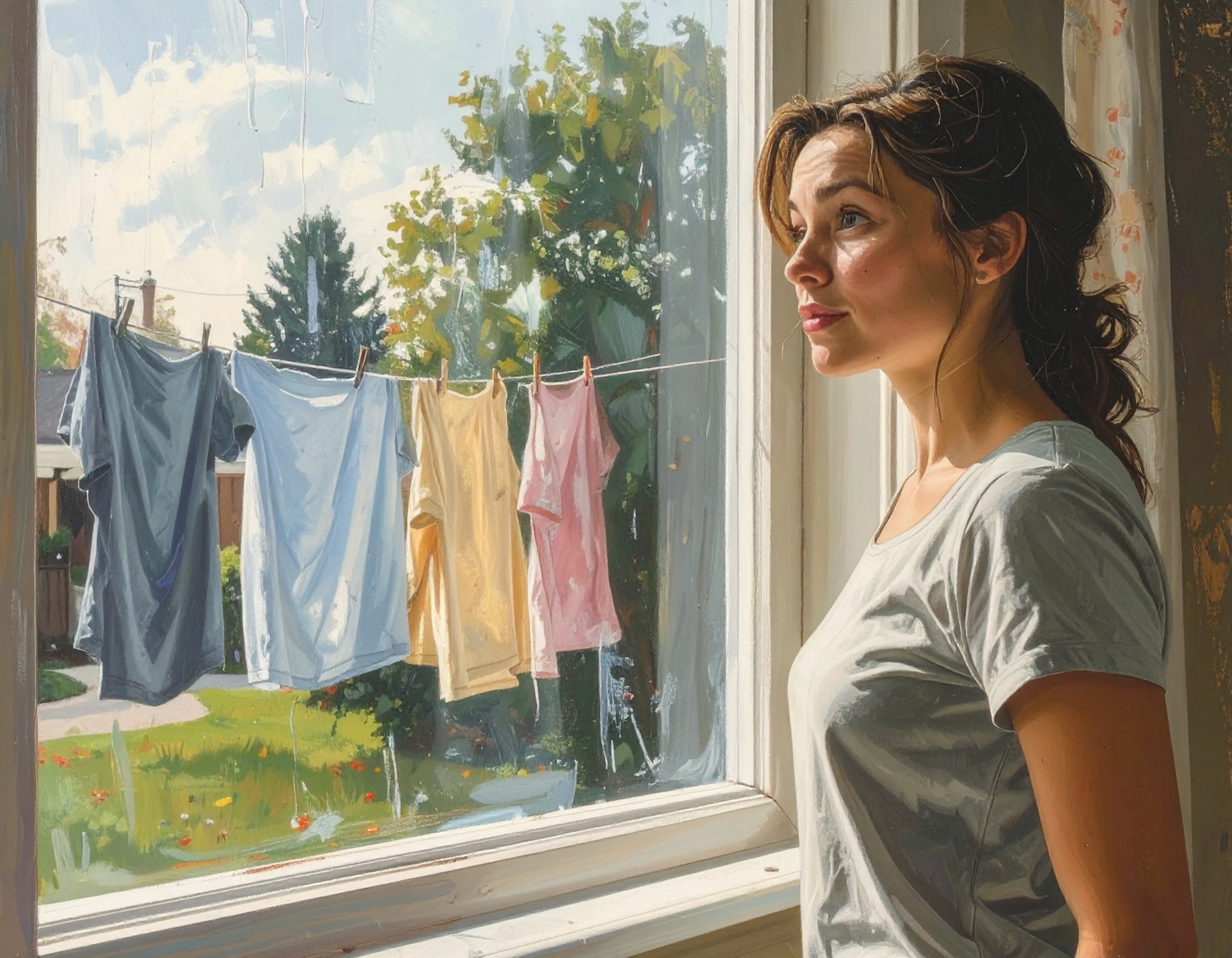
The next morning, she watched her neighbour hanging washing outside.
Still careless, she thought. Still messy.
She returned to Elias, frustrated.
“It doesn’t work.”
Elias simply asked, “Did you clean your window first?”
Mara paused.
“No.”
He smiled softly. “Then perhaps the lens is not the place to begin.”
The Young Boy
Another day, a young boy came in, holding a cracked piece of glass.
“I found this,” he said. “When I look through it, everything looks strange.”
Elias knelt beside him.
“What do you see?”
“Things look bent… broken… not right.”
Elias nodded. “And what do you feel when you see that?”
The boy thought. “Confused. A bit sad.”
Elias gently took the glass.
“Sometimes,” he said, “it’s not the world that is bent—but the glass we are looking through.”
The Realisation
Word began to spread.
Elias was not selling lenses.
He was teaching people how they were already seeing.
A man who believed everyone was against him began to notice how often he expected conflict.
A woman who felt overlooked realised she rarely saw kindness offered to her.
A merchant who thought the town was ungrateful discovered he had stopped expressing gratitude himself.
Each one came seeking clarity.
Each one discovered something deeper:
The world had not changed.
They had.
The Quiet Truth
One evening, as the sun set behind the hills, Mara returned once more.
This time, she spoke softly.
“I cleaned my window.”
Elias nodded.
“And?” he asked.
She smiled gently.
“The washing was never dirty.”
Elias said nothing.
He didn’t need to.
The Final Lesson
Years later, when Elias was no longer there, the shop remained.
But the shelves were empty.
No lenses. No glass.
Only a single message written on the wall:
🜂 “Clarity does not come from what you look at.
It comes from how you look.”
People still visited.
Some expecting to buy something.
Others hoping to understand.
And those who truly listened left with something far more valuable than glass:
They left with awareness.
Closing Reflection
Where in your life are you looking through a clouded window?
What might change if you paused…
softened…
and chose to see through the eyes of the soul?
Because when the lens clears…
Life does not become perfect.
It becomes understood.
Audio

“The Lens of the Soul — Seeing Clearly, Living Kindly”
The core teaching flowing through this service is that life is not only what happens around us, but how we see it, interpret it, and respond to it from within.
This teaching is gently introduced through the understanding of the soul. The soul is described not just as something we possess, but as the living centre through which we experience reality—the place where thought, feeling, and perception arise.
From this perspective, the service reveals a powerful truth:
We do not simply observe life—we participate in shaping it through our perception.
The meditation reinforces this by guiding us into the awareness of our inner light. This light is not separate from life—it is the very lens through which we experience it. When we connect with this inner light, we begin to see more clearly, more gently, and more truthfully.
The story “Dirty Washing” brings this teaching into sharp focus. The woman believes her neighbour’s washing is dirty, only to discover the problem was not the washing—but her own window.
This is the central metaphor of the entire service:
🜂 What we see is influenced by the clarity of our inner world.
Judgement, criticism, and misunderstanding often arise not because something is wrong “out there,” but because something within us is clouded—by past experience, emotion, expectation, or belief.
The teaching does not ask us to judge ourselves for this—it invites awareness.
When we clean our “window”—through love, reflection, humility, and presence—our experience of others changes. Compassion replaces judgement. Understanding replaces assumption.
The presence of Spirit, guides, and loved ones across the veil further reinforces that we are never seeing alone—we are supported, guided, and gently reminded to look through the eyes of the soul, not the fear of the mind.
Core Lesson
🜂 Life is not defined by what we see, but by how we see it.
🜂 When we clear our inner lens, the world reflects truth, compassion, and connection.
🜂 The soul does not judge—it understands.
To live well is not to control life, but to see it clearly, kindly, and consciously.