Tags:
“The House of Quiet Things”
Mara had always believed that life left clues. Some were obvious—like the missing keys she inevitably found atop the breadbox, or the half-finished knitting projects that told her exactly where her attention had wandered. Others were softer, subtle, hidden beneath days lived on autopilot.
But now, standing in the old house she had inherited from her grandmother, Mara felt surrounded by clues she didn’t yet understand.
The moment she stepped through the door, she sensed something stirring. Not movement, not sound, but the gentle vibration of a place waiting to be seen. Dust floated lazily where light streamed through the windows, illuminating motes that looked like suspended stars.
The house had been empty for years—too long, she thought. Too long for a place that once rang with stories, tea mugs clinking, and her grandmother’s warm laughter.
Mara had returned here to “sort things out,” as she’d told her friends. But the truth was heavier, more tender: she’d come because life had become too loud, too demanding, too far from the woman she once intended to be.
Her grandmother had called this house “The House of Quiet Things.” As a child, Mara never understood why. The house had always felt alive with colour and movement. But now, at thirty-four—tired, stretched thin, misplaced in her own life—she wondered if her grandmother had meant something else entirely. Something deeper. Something she herself was only now ready to learn.
She set her bags down and took a slow breath. The air smelled faintly of lavender, timber, and time.
As she wandered through the rooms, she realised something unexpected: nothing was cluttered. Her grandmother had not been a collector of things, but a collector of meaning. Everything here had a place. Everything had a memory attached.
But one room called to her more than the rest.
The small sunroom at the back of the house—the one with the mismatched cushions and the tilted bookshelf—felt alive, as though it remembered her. She used to sit there for hours drawing, reading, dreaming. It had been her sanctuary, her little world where she didn’t need to be anything but herself.
She ran her hand across the back of the old armchair, now faded with age. “Maybe you remember me,” she whispered.
A soft breeze drifted in through the cracked window, almost like a response.
The First Clue: The Seed Box
It wasn’t long before she found the first clue.
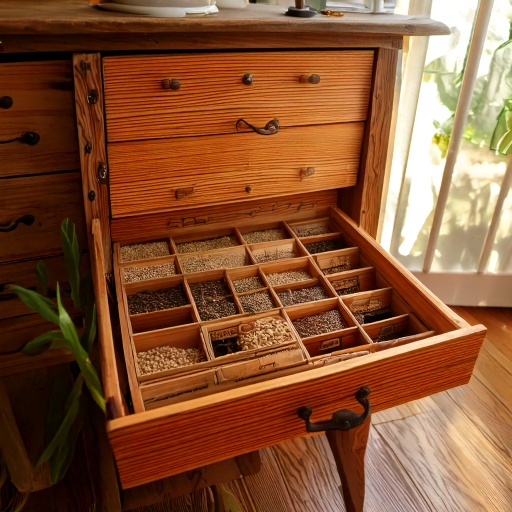
It was hidden beneath the old writing desk—a wooden box shaped like a small drawer chest, each tiny drawer labelled in her grandmother’s handwriting.
“Calendula.”
“Chamomile.”
“Rosemary.”
“Trust.”
Mara blinked. Did that last drawer really say Trust?
She pulled it open, expecting flower seeds, but found only a small folded note. It read:
“Plant this when you are ready to grow again.”
There were no seeds inside. Only the message. Only the invitation.
Mara closed the drawer slowly, the feeling settling into her chest like warm honey.
Grow again.
She hadn’t realised how deeply she needed those words until that moment.
The Second Clue: The Forgotten Canvas
The next clue appeared later that afternoon when she opened a storage cupboard.
A large sheet of cloth leaned against the wall—her old painting apron, splattered in colours she recognised from childhood projects. She lifted it out gently, brushing off dust.
And behind it was a forgotten canvas—one she remembered starting when she was sixteen. A landscape of the river behind the house. The water half-painted, the sky unfinished. The corners curled, the colours faded, but the feeling was unmistakable.
She had stopped painting after her mother died. She never picked up a brush again.
The canvas felt like a mirror held to her younger self. A version of her who created freely, who nurtured what brought her joy, who believed in her own voice.
She sat with it for a long moment, her throat tightening.
Where did she go?
But she knew.
She had drifted away.
Away from the things that fed her spirit.
Away from the gentle tending of her inner world.
This canvas was not a relic.
It was a reminder.
A calling.
The Third Clue: The Room of Stillness
That evening, as the sun set in ribbons of gold across the backyard, Mara discovered the third clue—the Room of Stillness.
It had once been her grandmother’s meditation room, though as a child, Mara had always tiptoed past it with reverence.
Now, opening the door, she saw everything as it had been:
- a single cushion on the floor
- a low wooden table with a candle
- a bowl of smooth river stones
- and on the wall, her grandmother’s favourite quote:
“Return to yourself every day. The world can wait.”
The air felt thick with memory and something else—something sacred.
She sat on the cushion, letting the weight of her life settle around her.
The job that drained her.
The relationship that had faded.
The unanswered messages.
The parts of herself she’d abandoned.
And as she breathed in the warm scent of old wood and simplicity, something loosened.
For the first time in months, she felt herself arrive.
Not in a place.
Not in a circumstance.
But in her own presence.
She closed her eyes, and for a moment, there was only silence.
Not emptiness—
but fullness.
“Return to yourself. The world can wait.”
The words sank deep into her bones.
The Fourth Clue: The Story of the Lost Sock
That night, after making tea, Mara curled up in the sunroom and opened one of her grandmother’s journals. She flipped through gently until a particular entry caught her attention:
“Sometimes we think we’ve lost something essential, only to discover we were meant to stand on our own two feet for a while. That is how we grow.”
The journal described a story — one Mara remembered vaguely — about a sewing basket that had once lost its favourite needle. Her grandmother had fretted, cleaned the house top to bottom, searched every corner, convinced she needed it to continue.
But in the search, she discovered she had collected many needles — some hidden, some forgotten, some brand new.
The missing needle wasn’t lost at all. It had simply rolled beneath a cushion, only to be found again days later.
Her grandmother wrote:
“When what you cling to goes missing, look for what you already have. That is where your strength lives.”
Mara closed the journal slowly, the message settling like a hand on her shoulder.
She thought of all the things she had mourned losing:
- her confidence
- her spark
- her clarity
- her sense of direction
But what if nothing was lost?
What if it had simply rolled beneath the cushion of her busy, demanding life — waiting for her to make space to find it again?
Nurturing the Inner Home
The next morning, Mara woke before dawn. She stepped outside with a mug of steaming tea and stood barefoot on the cool earth.
The house felt different now.
She felt different now.
Not healed.
Not fixed.
But aware.
Aware of what had been neglected.
Aware of what needed tending.
Aware of who she was beneath the exhaustion and expectations.
She spent the day gently restoring small things:
- cleaning the sunroom
- watering the plants her grandmother had once loved
- placing the old canvas on an easel
- sweeping dust from the meditation room
- reading more journal entries
Every act felt like returning to a version of herself she’d left behind.
Not the sixteen-year-old painter.
Not the child in the sunroom.
But the soul beneath all the layers.
The self waiting patiently to be remembered.
Across the next few days, she found more clues — each one echoing the same message: “Nurture what calls you. Return to the self.”
One afternoon, she allowed herself to sit at the canvas with a palette of fresh paints. She hesitated at first, uncertain whether she remembered how to begin.
But the brush found its rhythm—
tentative at first,
then peaceful,
then alive.
The sky she had left unfinished all those years ago unfolded under her hand. Colours softened together. Shapes emerged. Light found its way into the corners.
She realised she had never truly forgotten how to paint.
She had only forgotten to listen.
The Fifth Clue: The Note in the Seed Box
A week later, while cleaning the kitchen pantry, Mara found another folded note tucked behind the seed box.
It read:
“You do not grow by forcing.
You grow by tending.
Love what is yours to love.
The rest will follow.”
She pressed the paper to her heart.
Her grandmother had known her better than she knew herself.
She had left messages not for the past, but for the future — for this exact moment.
The Return
By the end of two weeks, something profound had shifted.
Mara had not solved her entire life.
She had not mapped her future.
She had not “figured everything out.”
But she had returned to herself.
She felt her breath deepen.
Her shoulders soften.
Her mind quieten.
Her heart reopen.
She realised now that wholeness was not a destination — it was a way of tending.
A way of living.
A way of listening.
She had not come to the house to sort through old things.
She had come to remember the one thing she had abandoned the most:
herself.
The Final Clue: The Letter
On her last evening before returning home, she discovered the final clue — a sealed envelope placed in the drawer of her grandmother’s wooden writing desk.
Her name on the front.
Her grandmother’s looping handwriting unmistakable.
Inside was a single-page letter:
“My dearest Mara,
When the world becomes too loud, come home. Not to this house — but to yourself.
You will forget who you are at times. You will lose your way. You will think something essential has been taken from you.
But nothing truly important is ever lost. It simply waits for you to stop, breathe, notice, and return.
Nurture your inner world as I once nurtured this home.
You are a garden of spirit.
You are love becoming itself.
You are never alone.”
The letter ended without a signature.
It didn’t need one.
Mara folded the paper gently and placed it in her suitcase.
It was coming with her — not as a memory, but as a guide.
Going Home — Truly Home
When she left the House of Quiet Things the next morning, she carried no boxes of belongings, no heavy baggage, no burden of unfinished tasks.
She took only three things:
- the seed box with the drawer labelled Trust
- the unfinished canvas, now blooming with new light
- and the letter, warm against her chest
As she drove away, she looked once more in the rear-view mirror.
The house did not feel lonely without her.
It felt satisfied, like a teacher who had completed its lesson.
Mara spoke softly into the morning air:
“I’m returning now. To myself.”
And for the first time in her adult life, she truly meant it.
Final Reflection
That night, as she placed the seed box on her bedside table, Mara whispered the words she had learned in the House of Quiet Things:
🜂 “What I nurture becomes my life.
What I neglect becomes my calling.
I return to the self, where my soul awakens.”
And with that, her new chapter began —
not with a dramatic transformation,
but with the quiet, sacred act
of nurturing the life within her
that had always been waiting
to grow again.
Audio (Abridged version)
“Returning to the Self — Nurturing What Calls You Home”
The thread running gently and consistently through this entire service is the profound reminder that we must nurture what matters, especially the parts of ourselves we have forgotten, abandoned, or placed last.
From opening words through to prayer, inspiration, meditation, and story, this service teaches one central truth:
Spiritual growth is not about becoming someone new — it is about tending lovingly to who you already are.
The teaching “Nurture All You Love” establishes the foundation:
We are caretakers of our inner world. Everything alive within us — our joy, creativity, emotional needs, intuition, potential, and purpose — grows where we give attention, and withers where we neglect. This is not judgment, but invitation. Neglect simply signals it is time to return, notice, and tend again.
The Inspiration Guidance deepens this message with exquisite clarity:
We are souls wearing bodies, arriving here with purpose already woven into us. Our task is not to accumulate worth, but to remember it. Awakening occurs not through force or grand transformation, but by giving ourselves permission to listen inwardly — to hear what our deeper self is asking for, and to nurture it with trust and compassion.
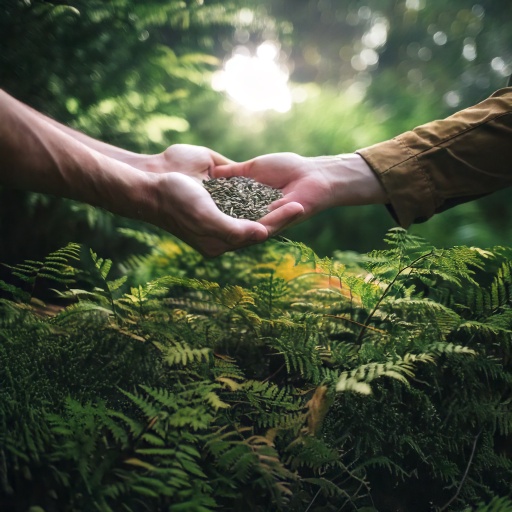
The Meditation “Returning to the Self” serves as the heart of the thread — guiding us into the inner garden, placing a seed of trust in our hands, teaching that nurturing ourselves is an act of sacred responsibility. The unseen allies — ancestors, guides, loved ones — do not interfere, but stand beside us, encouraging our growth, reminding us we are never alone in the tending of our inner world.
Finally, the Story of the Lost Sock completes the lesson with lightness and wisdom. What seems like loss is often an invitation to rediscover ourselves, to explore spaces we ignored, to recognise our own value and capability independent of external attachment. Sometimes nurturing means stepping into independence; sometimes it means rejoicing in reunion — but always, it means growing.
Together, these pieces weave a cohesive teaching:
Core Lesson
🜂 Return to yourself. Nurture what whispers for your attention. Listen to the soul’s quiet needs. Growth begins when you tend with love to what has been overlooked — whether it is purpose, rest, creativity, connection, healing, or courage.
🜂 What you nurture becomes your life. What you neglect becomes your calling. Spirit walks beside you, but you must choose to return to the place within you that is asking to grow. breath, every act, and every step. Life itself becomes the sacred journey—where body and soul move as one, and gratitude transforms every worn path into a trail of light.