Tags:
The Bell That Had Never Been Heard
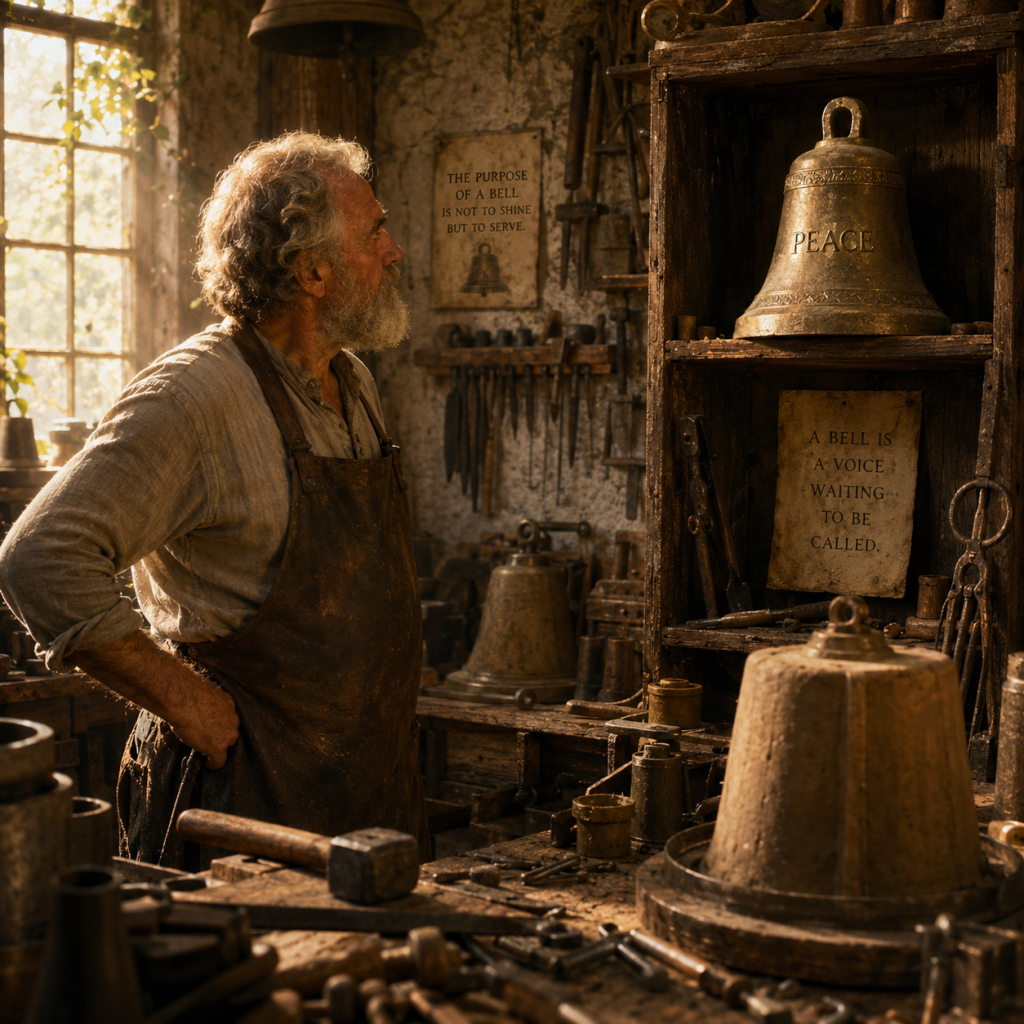
For forty-seven years, Niall Byrne had made bells. He was known throughout the town for the warm, clear voices of his bells.
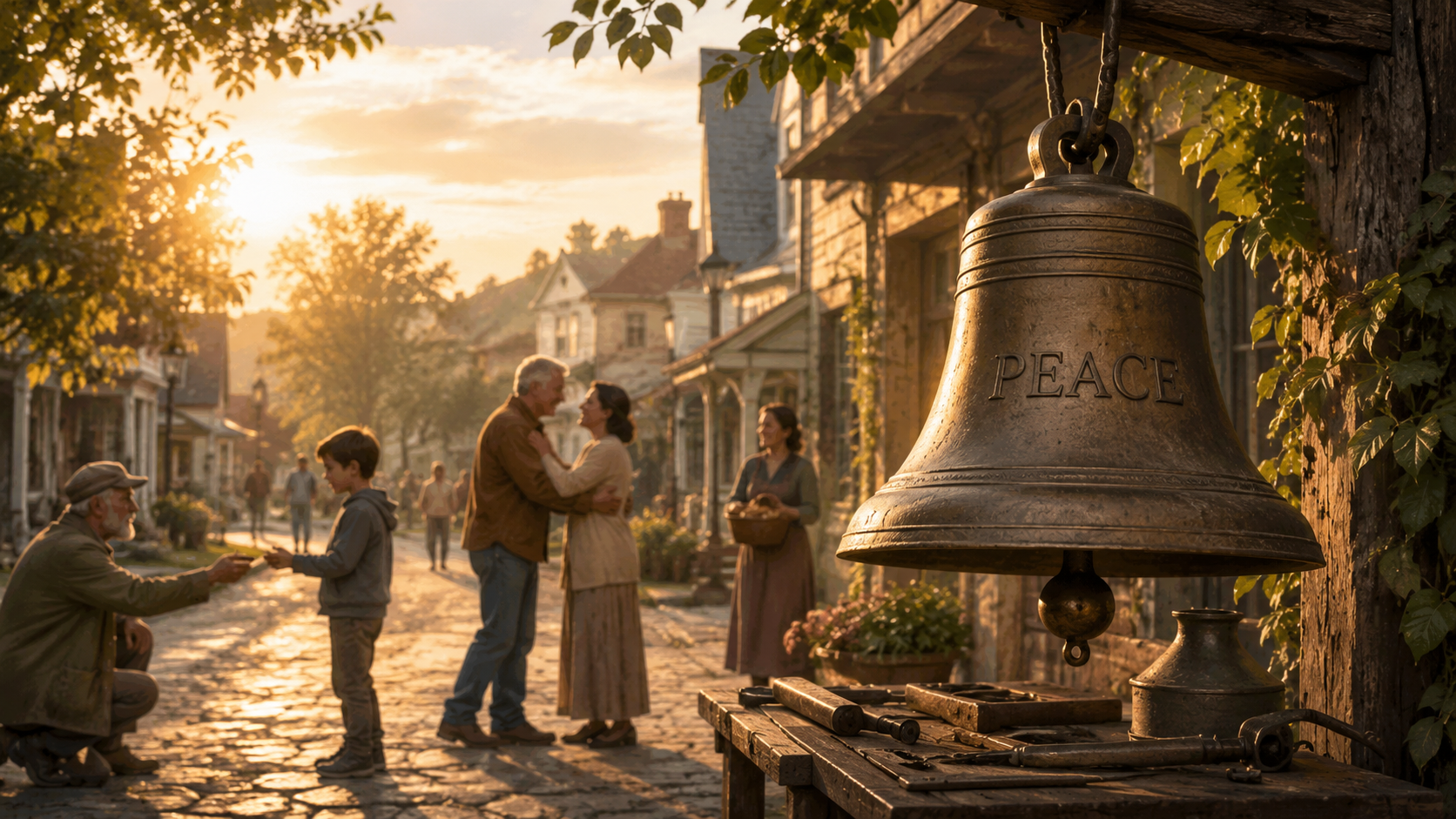
Yet one bell on the back shelf had never been rung. Around its lower edge was engraved one word:
PEACE.
Niall had made it during a troubled time. Families were feuding, jobs had been lost, neighbours had stopped speaking, and worry seemed to hang over the town.
“I’ll ring it when the town is peaceful again,” he had decided.
But the right moment never came.
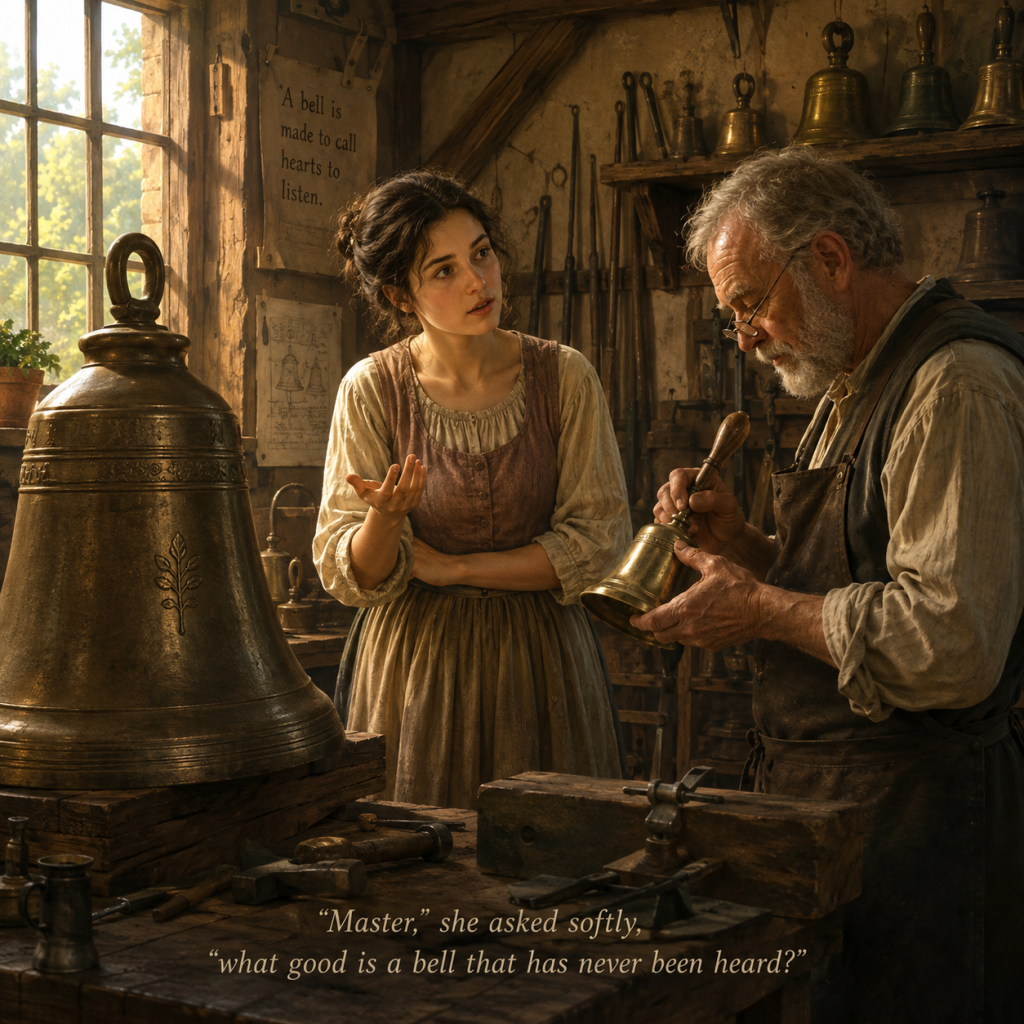
Years later, a young woman named Mara brought him a broken school handbell. While he worked, she noticed the silent bell.
“What does that one sound like?”
“No one knows,” Niall replied.
“Not even you?”
“I’ll ring it when the time is right.”
“And when will that be?”
“When people are kinder. When there’s less anger.”
Mara smiled. “So you’re waiting for peace before you ring Peace?”
Niall frowned.
“I only wonder whether bells are meant to make a sound, not wait for the world to deserve one.”
After she left, her words stayed with him.
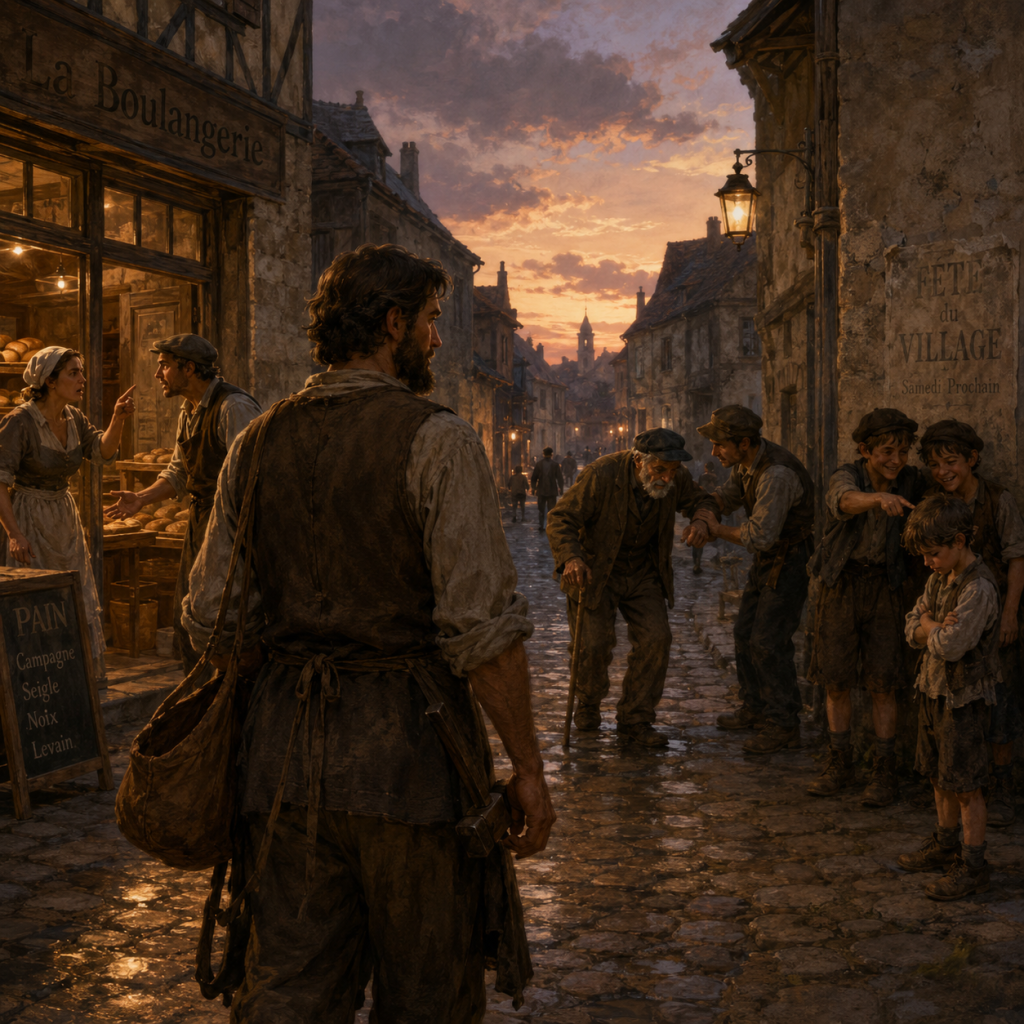
That evening Niall walked through town. He saw an argument outside the bakery, an elderly man struggling with his walking frame, and a lonely boy being mocked.
His first thought was, Not yet.
Then another thought came:
Have I spent all these years asking whether the town is peaceful enough for the bell, without asking whether I am peaceful enough for the town?
At home he found a letter from his brother Patrick. They had not spoken for six months after an argument over their father’s estate.
Patrick had written: I don’t want us to lose years over this.
Niall had been waiting for Patrick to apologise first.
This time, he stopped waiting.
He wrote: You are right. We have already given this too much time. I am sorry for my part in it. Come for tea on Sunday.
Posting the letter did not solve everything, but something inside him loosened.
The next day he learned the woman at the bakery was struggling because her husband was ill. Instead of judging, he listened and quietly offered help.
On Sunday Patrick came for tea.
The old argument surfaced, but instead of defending himself, Niall asked, “Do you want to be right, or do you want your brother back?”
Patrick paused.
“Both, ideally.”
They laughed.
The disagreement remained, but love returned to the room.
The next morning Niall took the bell marked PEACE from its shelf and hung it above the workshop door.
By lunchtime a small crowd had gathered. Mara came with several schoolchildren. Patrick stood near the gate.
“Is the town finally peaceful?” someone called.
“No,” said Niall.
“Then why ring it?”
“Because I misunderstood what it was for. I thought peace had to arrive before I could honour it. I thought kindness was easier when someone else went first. I was wrong.”
He pulled the rope.
The bell gave a deep, warm note that travelled over the rooftops.
Nothing miraculous happened. Old problems remained.
But people paused.
And in that pause, some chose differently.
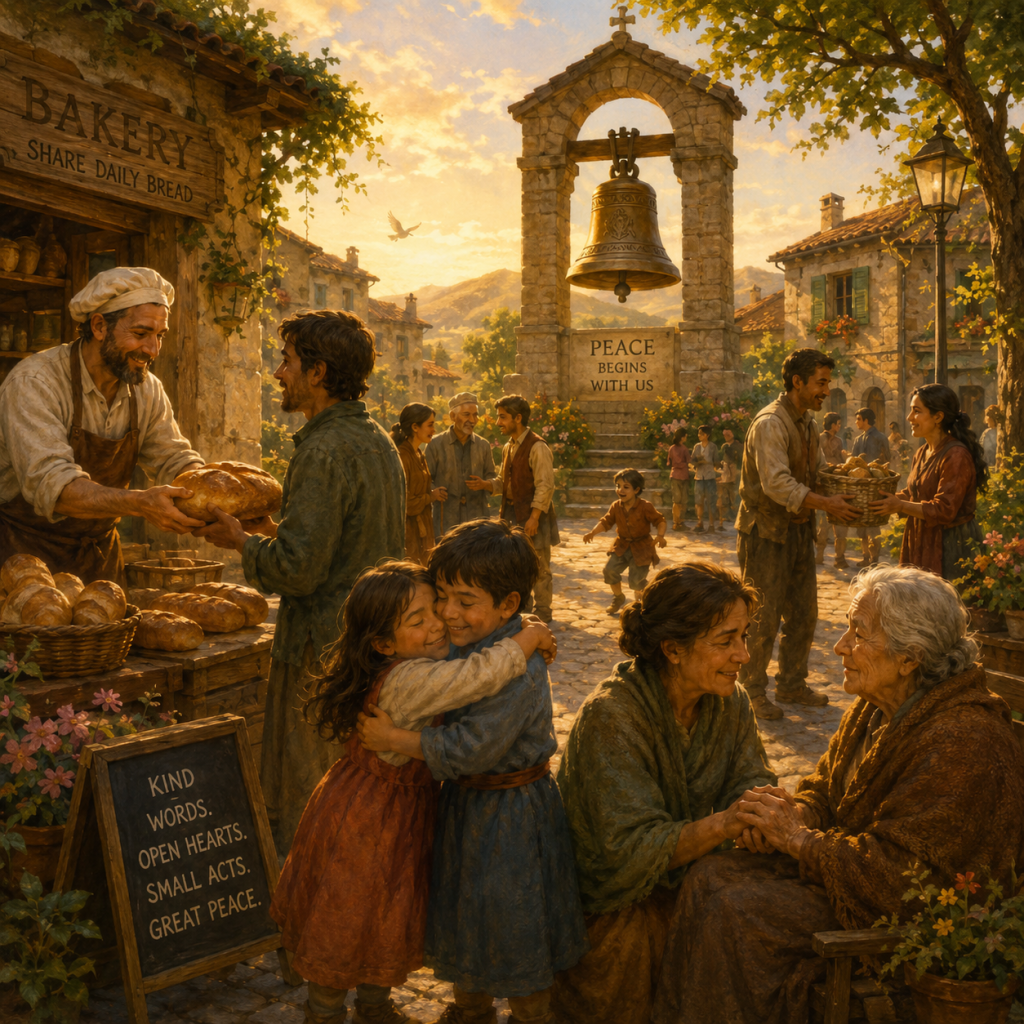
The baker showed compassion. A schoolboy apologised to his sister. Patrick called his estranged daughter. Mara visited an elderly neighbour.
Niall began ringing the bell every morning.
Not because peace had arrived, but because peace was available as a choice.
Months later, a visitor asked whether the bell had changed the town.
“No,” Niall said. “A bell cannot do that.”
Then he smiled.
“But it reminds people they can.”
For most of his life, he explained, he had treated love, forgiveness, kindness and peace as spiritual ideas.
“But knowing the words is not the same as letting them become your hands and feet.”
He pointed towards the bell.
“That piece of bronze carried the word Peace for years, but while it remained silent, it changed nothing.”
“So ringing it is the important part?”
“The choosing is.”
Years later, after Niall was gone, the bell remained above the workshop.
Every morning someone still pulled the rope.
Its sound offered no command. It simply left each listener with a choice:
Would they carry irritation into the next conversation, or patience?
Would they wait for kindness, or offer it first?
Would they keep rehearsing an old hurt, or begin forgiveness?
The town eventually understood what Niall had learned:
Heaven on Earth is not a perfect place without hardship. It appears in ordinary moments when someone chooses what their heart already knows.
A softer word. An honest apology. A hand offered. A judgement withheld.
Perhaps freedom is not escaping every difficult thing.
Perhaps it is discovering that, even in an imperfect world, we can still choose what we bring into it.
The bell named Peace still rings.
And every time it does, the town remembers:
Peace is not something we wait for.
It is something we practise.
Love is not something we admire.
It is something we choose.
And Heaven on Earth does not begin when the whole world changes.
It begins when we do.